Showing posts with label Books. Show all posts

Thursday, February 24, 2011

MHI–Larry Correia

mhiI knew about 20 pages in that Monster Hunter International was going to keep me turning pages until I finished it. It is a 700 page book I started on a Sunday and finished on a Wednesday. Now that is not my personal best, but it comes quite close. This book is an addicting thrill ride from page 1 through 700. Corriea takes horror action to the next level and I appreciate how he broke tropes of the Urban Fantasy genre.

I am going to make a comparison between this novel and The Dresden Files, it is probably not a really good or fair comparison but it is going to happen anyway. from the get go some of this story reminded me of Butcher’s accounts of Harry Dresden. Our world, plagued by monsters, overbearing authority with lots of complex rules about what the protags can and cannot do when fighting them, etc. Where MHI diverges is in one small but extremely important area. Correia never cripples his characters. I appreciate the fact that the good guys are rough and they are tough and they are capable of fighting anything that comes their way. They don’t simper and complain, they don’t spend pages of the book whining. They kick in the door and kick monster butt. Too many authors today think the protag has to be vulnerable or weak to get people to identify with them. Not Owen Z Pitt, he is a straight BAMF from the first page to the last, and I loved it. Sure he gets beat up, sure he loses some fights, and sometimes monsters get the best of him. But I never felt that he was getting through every encounter based solely on his luck. Pitt made his own luck. As opposed to Dresden who spends the whole of each book barely escaping from events by happenstance, then complaining about it. I loved reading about the good guys fighting evil with nearly limitless resources. There was very little of the “omg yay we are getting saved by something out of nowhere that we never thought would happen” bullcrap and a whole lot of “empty your shotgun into its face then cut off its head” moments. I can never help but sigh when Dresden is captured by a couple of weak easily killable monsters, those monsters don’t have a chance against Pitt and MHI.

Corriea makes the danger come from the strength and power of the evil dudes. Rather than writing one semi tough vampire being fought by a few unprepared sheep not ready to face its strength, Correia gives us 7 amazingly powerful vamps facing off against the collective might of modern weaponry carried by the Army, the Feds and MHI. This feels so much more epic to me.

I did have a slight problem with a bit of the wacky magical stuff toward the ending, and the way Pitt ended the threat (not a spoiler there is already a second book out) I don’t like that “magic saves the day” stuff, but Pitt did all he could with his guns, knives and fists before he resorted to it, so I am not gonna complain much.

Monster Hunter International is rip roaring good read. it is so much fun that I could not put it down. I highly recommend it if you like horror or action.

Monday, February 21, 2011

Mistborn: The Final Empire–Brandon Sanderson

mistborntfeI will say this right now, up front. The Final Empire is hands down the best fantasy novel I have ever read.

Ok so I have that out of the way, what more is their to say right? Well, I guess I should tell you why I loved it.

First off, amazing, fantastic, deep rich character development. Kelsier, Vin, Dockson and the rest of the gang stood out to me as individuals, I worried about each of them and pulled for them through the entire story. I could say more about it, but suffice it to say this was really well done, but not the best thing in The Final Empire, not by far.

Sanderson is a smart man. He is nearly fanatical with the care and level of detail he puts into the systems in his book. Not just that magical systems for which he is highly acclaimed but the political systems and the bureaucratic systems as well. At its heart Mistborn reads like a political novel. It repeatedly brought the tales of Charles Dickens to mind as Sanderson described the bleakness of the world, the harsh social realities of the ska and the drudgery of everyday life in the Final Empire. Smokey, grimy Luthadel often reads like the London of a Dickens novel. It is a familiarity that brings Luthadel to life in the mind of the reader. I admire the painstaking way in which Sanderson details such a hopeless society, there is no wiggle room left for the underclass, they are trapped and they know it.

The first time I met Brandon I asked him about The Final Empire, I wanted to know if he considered it a dystopia, and his reply was an emphatic yes. Fantasy readers have encountered many bleak, terrible places in their journey through various novels, but Sanderson is the first person that I have read who has really treated his work like a dystopia. The political elements are strong and well thought out. There are distinct class elements in The Final Empire and they intertwine so well with the fantasy story that is happening among them.

Along with politics, I was enthralled by the economic system in the novel and how it hinged on a single precious commodity that was basically the lynchpin of the entire system. I was fascinated with the idea of the way the Lord Ruler controlled the substance and the consequences for the nobility if that supply were lost. Sanderson does something that so few do: he gives us reasons. He tells us why everything matters, he makes everything important. Mistborn is the story of a seemingly impervious empire built on the backs of an oppressed underclass and funded by a single precious element.

It is all held together by the awesome power of the Lord Ruler. Never in my life have I read a more interesting, and downright scary bad guy. Another way in which Sanderson excels, the Lord Ruler is a mystery, a figment, a secret font of dark power, never flaunted, but always felt, like a beating heart at the core of the Empire, the only thing giving it life. He is the shark in Jaws, scarier because we never see him, and when we finally do it is concludes one of the strongest scenes of action I have ever read in any novel.

Sanderson is a master of nuance, The Final Empire reads like the masterwork of an author who has perfected his craft. Ok was this review glowing enough? Shall we wrap it all up by saying I loved this book? Ok? Good.

I cant stop reading this!

mhi

I don’t care who you are, this book is friggin fantastic. Ok yeah, if you do not like the diea of big bad beasties getting blasted into little flying bits of goo and jelly, maybe it is not for you. But if you are looking for an ass kicking fun romp through a monster infested world, buy this, read this now. I have not in many long years been this caught up by a book. This is what reading is meant to be, FUN! Give me this book over any action flick ever made (just me not a big action movie guy) I find myself up at all hours of the night looking for one more page.

AND, its SCARY!!!! There has been a couple scenes so far that have had me shaking, and when I got up to go to the bathroom last night I literally checked my ceilings for anything crawling after me. I cannot say enough, this is fantastic!

Just had to drop this quick blurb on ya, more info on LTUE and everything else coming soon.

Tuesday, February 8, 2011

Brandon Sanderson–A New Favorite.

Brandon-Sanderson-author-photo-776x1024Brandon Sanderson has shot up quickly to the top of my list of favorite fantasy authors. At one point in my life I was reading 60+ fantasy novels a year. that point ended in 2006. Elantris, Brandon’s debut novel, was released in 2006. It is not by happenstance that I had never heard his name uttered (even as the man who would finish the WOT series, even as a local author, even as a professor at a school which several of my family members attend). I stopped reading fantasy around 2005/6 because I returned to school full time and it left me no spare moment to read anything other than textbooks, philosophy, memoirs, histories or political treatises. Not always was I reading them for school, but it had become something I did for fun and felt like if I was reading something it should somehow correlate with my education. Then I met PoseySessions, she reminded that reading was a way to explore our imaginations, she got me excited to once again crack open a fantasy novel. her passion is infectious, if any of you know here, even through the internet, you probably know what I am talking about.

Within a month of meeting her she began telling me about a story she was reading, Elantris. I was at the tail end of East of Eden (John Steinbeck) and was not sure about speculative fiction, something about years in university had soured my imagination for flights of fancy. So I listened patiently as she told me about this book that I thought I would never read. Then I did read it (review below) and it ignited a spark in me.

Sanderson is a masterful story teller, sure I found a few flaws with Elantris, maybe I was being hyper critical with my freshly scrubbed brain, but for the most part I stick by my review. I wanted to read more fantasy. I went searching and strange names were popping out at me like road signs in the dark flying past at a hundred miles an hour. Names I had not heard before. Bakker, Erikson, Butcher… and many more. I thought I was versed in the genre, but the years had left me behind. One name that kept popping up was Brandon Sanderson. I knew him from his debut work and decided if I was going to jump headlong back into fantasy he would be the place I started.

That was an excellent choice.

I cannot say too much about him as a writer without spoiling the way I feel about the other books I have read, which I will be reviewing this month. I know I am late to the party here, but Sanderson is probably in my top 3 favorite fantasy writers of all time. And I could not order the list if you asked.

After having met him I can say, without hesitation, the guy is legitimate. He speaks about the fantasy genre with passion. He understands what he is writing and the audience to which he writes. He grew up reading what we read and he is writing stories for those of us who can relate. He is also just a fantastic writer. He formulates stories that are spectacular. He interweaves his books with so much substance that they transcend a single genre.

Long after growing tired of Robert Jordan (He is a legend, may he rest in peace) and the Wheel of Time the injection of Sanderson into the series has brought me back around and I have just started my own reread, very excited to finish the series with him at the helm. So stick around for a couple more reviews of his works and a post concerning some things he said while speaking at Teen Book Fest.

Monday, February 7, 2011

Elantris - Brandon Sanderson (Repost)

*** In honor of an upcoming slew of posts focusing on the writing of Brandon Sanderson I am reposting my review of Elantris for context and your reading pleasure.***

I love fantasy. I was about 8 years old when my dad read me The Hobbit, and around 12 when I finished my first read through The Lord of The Rings. Ever since I have sought out and enjoyed many fantasy series. In one year, I read 60 fantasy books, 40ish being my average. However, lately my fantasy reading has stalled, I have found very few new and worthwhile fantasy authors, and have read so much of the genres back catalogue over the past 15 years that I feel like I am caught up, waiting desperately for something new and exciting to come out. That feeling has dropped me out of the fantasy mainstream for the past couple of years, and I have instead been reading academic history and politics books in order to round out my education. It is rapidly approaching time for me to graduate college, and with a light semester upon us I have been searching high and low for new and interesting fantasy to read. Poseysessions introduced me to Brandon Sanderson and Elantris.

I will jump right in and say Ioved I Elantris, it was the best, and most original fantasy novel I have read since Michael Moorecock's tales of Elric of Melnibone. Sanderson writes with a dry narrative style that allows the stark reality of his world penetrate the reader imagination. Elantris is refreshingly free of flowery embellishment, or sappy emotional overtones. While the characters in the story suffer, it is a dignified, humble suffreing that shines through in Elantris. Along with a masterful use of the invisible style, Sanderson is a genius worldbuilder. Because Elantris is a standalone novel it made sense that Sanderson did not bog down the story with unneccesary details about the world. Arelon and Elantris are wonderfully portrayed, as theya re the focus of the story. The rest of Sanderson's world feels real and definite, each culture is explained well inasmuch as it affects the story at hand.

The Magic in the story is one of the biggest assets to the book. Sanderson created a magical system that is based in reason, yet remains mystical. The payoff regarding Elantrian magic is simple and that simplicity lends credit to Sanderson's imaginitive process. I thoroughly enjoyed Raoden's discovery , especially because Sanderson made the magic based in notions of science that allowed me to solve the problem regarding AonDor pages before the main character. This is consistent with Sanderson's view that magic in his books is always based in the natural laws of the worlds he creates. As a reader I appreciate the fact the there is no Deus Ex Machina in Elantris. It makes the reader (me) feel like Sanderson is an author who has faith in my ability to reason.

Elantris was not a book without its shortcomings. For a fantasy book I felt it suffered from a lack of action, especially a climbing story arc. The first 500 pages felt like a continuing arrangement of point counterpoint by the Sarene and Hrathen. The only point of view that seemed to have a rising storyling was Raoden's and even that was broken midway through the tale, only to be restored later on. The climax finally came in the last 10% of the book, yet it felt totally unconnected to the previous pages. Sanderson end-loaded the book, a huge chunk of the movement of the story happens after page 500. There are very few "carrots" for the reader in the first three quarters of the book, and without story movement, or action, the reader is left with (the very well written) political intrigue. Which was more than enough for this reader to fall in love with Elantris.

My final gripe with the book was the lack of character depth, while I did grow fond of Hrathen, Raoden, and Sarene, I felt the latter two lacked depth and cahracter development, there were both very one note. Hrathern, however, was extremely well written and developed, his inner struggle was a point on which the story hung for me, that along with the mystery beind him made constantly wonder how he would turn the tale.

Elantris was a good, bordering on great fantasy read, while I did have a few technical gripes with the story I felt myself slowing down my reading as I reached the end, soemthing that is common for me when nearing the end of a book I love. I just do not want it to be over. I wish Elantris was a series and not just a standalone novel. I am impressed that Sanderson fit so much lore and intrigue into a single volume, especially for a debut work. It speaks to Sanderson's place among the top tier talent of fantasy writers.

Reality is Broken–Jane McGonigal

McGbookcoverPoseysessions was kind enough to volunteer me for the Reality is Broken book tour. We both have a shared interest in gaming and before I even read the book she wanted to interview me about my experiences as a gamer. I would like to preface this interview and all my following statements by saying while I enjoy many computer and console games, I would not consider myself a hardcore gamer. For me it is more about the enjoyment than about the triumph.

Q: McGonigal starts her book by saying “Gamers have had enough of reality.” As a casual gamer would you find yourself agreeing with this statement?

A: Yes and no, gaming provides a temporary escape, but personally don’t feel like it is meant or able to supplant reality.

Q: What motivates you to play a game? What kind of games do you like?

A: Relaxation, challenge, and escapism are all motivating factors when I feel like gaming. I prefer RPGs and strategy games, and games with a high level of customization for the player.

Q: Have you ever thought that aspects of your life would be more enjoyable if they were more like a game you had played?

A: No not really, but I have thought that a game would be more fun if it was less like real life

Q: Do you feel socially connected through any of your gaming experiences?

A: Very little, with the exception of socially oriented games like MMORPGS, with any other game not at all.

Q: What would you change about your life to make more like a game you played?

A: I think games are enjoyable because they are separate from reality. A reality that was like a video game, or a video game that became reality would soon suffer from the same sense of banality that we prescribe to real life.

Reality Is Broken has a lot of things of interest within it’s pages. One thing I liked thinking about was the way that gaming connects with ideas of economy. I had never really given it much thought before but the things that draw us to gaming in a way become there own currency. So much so that in 2009 China was forced to regulate the use of virtual money for fear that it would begin to devalue yen. "The virtual currency, which is converted into real money at a certain exchange rate, will only be allowed to trade in virtual goods and services provided by its issuer, not real goods and services." The dynamic that has been created by gaming that makes it so that this type of regulation has to be is fascinating. People want virtual money more than they want physical items present in their life.

In the book McGonigal makes reference to economist Edward Castronova who sees a “mass exodus” of people out of their life and into gaming worlds. People are finding so much value in the virtual and digital world that the moments of reality of increasingly devalued. Reality Is Broken suggest that gaming provides and excitement that is lacking from real life, even within work and school settings productivity could be improved if there were a more game like atmosphere.

One of my favorite sections of the book was the chapter called “Leveling Up In Life.” In this chapter McGonigal presents different ways that we can take gaming concepts into the real world. One amazing idea came from Clay Johnson who created plusoneme.com after hearing McGonigal speak. The tagline of the site is “gold stars for grownups.” The concept of the site is to use a gaming term “plus one” and use it as a way to compliment friends, family, and coworkers in a fun and unusual way. And in a way this gaming concept again becomes like a currency to those that use it. The currency of gaming can be very validating and that is why we need more of it in our every day life.

In Reality Is Broken the author goes on to say, “Systems that help us level up in real life, by providing us with voluntary obstacles related to our real-world activity and by giving us better feedback really can help us make a better effort.” A lot of people feel undervalued and invisible in their working life and that is why they turn to gaming for escape. Throughout the book McGonigal suggests ways that we can use gaming concepts to fix real world problem. This chapter is the home for Fix #8: Meaningful rewards when we need them most. And too me it makes quite a bit of sense.

I have even set up a plusoneme.com account for PoseySessions and myself, so if you feel like giving us any gold stars just head on over there! (You may need our email addresses so just leave a comment if you want them.) Because after thinking about it I don’t think it would be so bad if there was a little more reward in every day life.

Oh, and one more thing. The Penguin Press has been generous enough to offer me one copy as a giveaway. Just leave a comment saying you would like to be entered. Contest closes 2/12/2011. Sorry US/Canada only. Please make sure you leave a way to contact you if you are the winner.

Tuesday, February 1, 2011

What to Read!

the_maze_runner_book_cover_01I have so much more time to read now that I am basically between finishing my education and finding a job. I am in a strong fantasy mood and have decided to check out a slew of fantasy books that I have not yet read. I am really excited to dig into some of them. But, first things first:

LTUE is this month, and it will be my first time attending. James Dashner is set to be the guest of honor. I have read (and not yet reviewed) most of the first 13th Reality book, but did not entirely enjoy it, so I decided to give Dashner one more shot.9780765359247 Right now on the nook I am reading The Maze Runner. Tracy Hickman will also be at LTUE so I plan on reading the first book in his Dragonships of Vindras series before attending as well. I am very excited for the event and look forward to hearing what many great fantasy writers have to say about their craft. There will definitely be at least one post, maybe more, from BYU this month!

Next up for fantasy is going to be something from this list. Granted I have read a lot of the books here, but there are a few I have only heard of in passing and cannot wait to jump gardens_of_the_moon_coverinto. I think after LTUE I will start The Malazan Book of the Fallen series by Steven Erickson, and after the first book in that series I am queuing up The Name of the Wind by Patrick Rothfuss (a suggestion for the Book Safari by Shanyn) having failed to find this used I will probably see about getting an ebook version. That is as far as I can go ahead, because any one of the previous mentioned books has at least one sequel, if they are good enough I might be sucked in!

As far as other readings go I am finding myself caught up in a whirlwind of great reading regarding one of my other favorite the-name-of-the-windtopics; Science and the paranormal. PoseySessions found me an amazing book, Ghost Hunters: William James and the Search for Scientific Proof of Life After Death, it is currently sitting at her house with about 40 pages read, cant wait to finish this one, and another book that reads like a sequel, Unbelievable: Investigations into Ghosts, Poltergeists, Telepathy, and Other Unseen Phenomena, from the Duke Parapsychology Laboratory. Both books are very similar and document closely related subjects happening 40 –80 years apart. Ghost Hunters chronicles Harvard psychology professor and pragmatic philosopher William James’ (whom I am enamored with) search for scientific proof or disproof of ghosts or spirits. Unbelievable is an account of Dr. J.B. Rhine’s search for ESP ( I found a first edition of Rhine’s New Frontiers of the Mind on the book safari, woot) I plan to finish these and maybe do a series of posts on them and my own philosophy on the topic.

41CqUtUeVZL._bL160_blum

Thursday, December 30, 2010

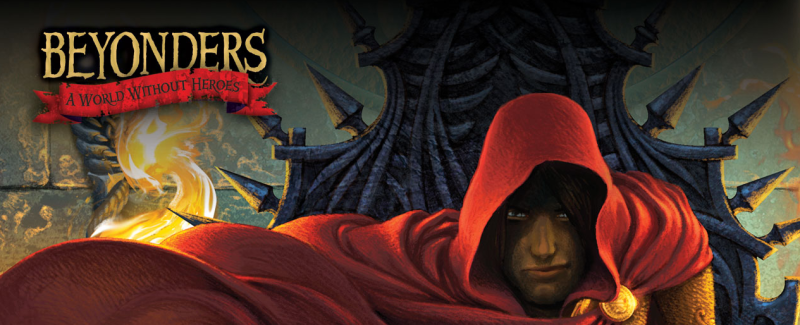
Beyonders: A World Without Heroes - Brandon Mull


I have become a Brandon Mull fan with blazing speed, meeting him on October 31st, and finishing all of his books by Christmas. Mull is a great story teller, and without that I would have not rushed through everything he had to offer so quickly. One thing I am happy I got to read was the first book of his new series Beyonders. I was lucky enough to get it in ebook format from Simon and Schuster's Galley Grab of about a month back. A World Without Heroes officially releases march 15th of 2011, but I have chosen to wrap up Brandon Mull month with an early review of the book.

I have said it many times, but it bears repeating if you are going to dig into A World Without Heroes: Mull is a slow starter, plain and simple. I realized it while reading the Candy Shop War, and when I tuned into a local talk radio station last week I caught them right in the middle of discussing Fablehaven, before long the speaker stated "the first book starts out kinda slow" a sentiment I share. The good thing about Mull is once he gets over the initial drudgery of setting up his tale they usually take off on a rip roaring pace and finish strong.

I do not like to follow the old "talk about all the bad stuff first then give a good review" line that I see so often (but yes I do it), however, I am definitely going to do that with this post. Why? because the book starts bad. There was a moment around a third of the way through that I almost decided to put it down and forget about it. The writing is solid as always with Mull but the narrative for the first 200 pages borders on boring. It takes him a long time to get to the meat of the story, and even then it takes more pages to get into something that feels like a fantasy adventure.

The first part of the book jumps from chapter to chapter each named after some inconsequential character that the protags meet on their quest. A lot of the early stage of the novel feels phoned in, or a mad libbed version of a fantasy book. They meet _________ on the road, he is a _______ and has the power to _________. Then that character fades away as they continue the journey down the road to meat another similar character. The early part of the story is extremely linear, I felt like I was reading a choose your own adventure that only had one choice. I got frustrated many times with the lack of any narrative twist or sense of real threat or danger. Mull employs a trope early in the book that drove me nuts for many pages. An all powerful antagonist who can crush the protags any time he chooses, but lets them continue their quest just for his own amusement, oh yeah and their quest is to destroy him. I groaned every time I heard another excuse why these little nobodies were not being ground to dust under the boot of the evil emperor. BUT, Mull proves his ability later in the book. He turns a groan inducing plot device into a really interesting and unique aspect to the book. It is the twist ending that Mull does so well, it was set up perfectly early on to give the reader a facepalm moment, but still reading through it initially was a bummer.

Almost directly in the middle of the book A World Without Heroes gets good, no great. It takes Mull's introduction of political intrigue and scheming, the imminent threat of death and a spectacular invitation to a wondrous place to make the story come to life. That along with the introduction of some truly awesome supporting characters and finally a sense that the protags have a mind of their own and we begin to see where this story will grow. There is more payoff later in the book as some of the toss away characters return in different capacities. Mull employs some great techniques to paint a dark world covered with a flimsy facade of whimsy. While the protags are on the move it seems like the world is of little consequence, lacking richness or depth, once they stop somewhere Mull takes the time to detail the setting of each of the episodes that take place within the book. It left me feeling like I was looking at a tiny world filled with blandness but peppered with a few points of great interest.

As the narrative picks up in the second half A World Without Heroes becomes a strong and enjoyable fantasy novel. Along with being a slow starter Mull has a thing for one dimensional main characters. In every one of his books I have found the supporting cast to be more interesting, more detailed and more fleshed out than his main characters. The same goes for this book The female protag, at times, seems like she merely represents an outlet for the male character to vent his frustrations. However, from the ending it seems like this may change in the second book. It should also be said this is definitely a story from a boys perspective, whereas I felt Fablehaven was more balanced, but leaning toward a girls point of view, A World Without Heroes is told more through the eyes of a male protag. While Fablehaven made a point to complete each book with its own conclusion, A World Without Heroes does not have a solid ending point, and the story is left unresolved to be picked up with the next book.

readers should rejoice, though you will have to slog through a couple hundred pages of mediocre narrative you will dive into the deep end of a fantastic fantasy adventure, and in the style of Mull's previous series, the action should not die down in the beginning of each subsequent book, it feels like he has shaken out the cobwebs, laid the cards on the table and with the first book in the Beyonders series has prepared the reader for two more books stacked with fast paced fantasy adventure. We can only hope!

Wednesday, December 15, 2010

Fablehaven–Brandon Mull

FableHeader

Prior to attending Teen Book Fest in Provo I had read eleven pages of Fablehaven, closed the book and mostly forgot about it. After meeting Brandon Mull I decided to give this one another go. What turned me off was the familiar opening and the realization that this was another urban fantasy. I picked the book up and began to read. It was several pages before my interest was piqued. It seems to me that Mull is a slow starter, which is not really a bad thing, but with so many books out there dying to be read I often give up a little too early. In the end I am very happy I picked this book back up.

It takes a while to get into the meat of the story, but when Mull begins to unravel mysteries and secrets the roller coaster ride never ends. There is so much packed into this book that it is hard to decide where to begin. The world of Fablehaven is our own world, usually this is not very interesting to me, however, Mull pulls it off like none other (ok, ok, maybe one other) I loved the idea of a world that used to be filled with magical creatures with human eyes slowly being closed to their existence over time. I loved the setting. Connecticut. Having just visited the state for the first time this summer I was entranced by the natural beauty. It was fresh in my mind and with Mull’s descriptions I was easily able to pictures the forests and streams of Fablehaven.

Mull intrigued me with the hints of sinister and evil creatures, his depictions of terrible monsters, and warnings to not peek out the windows on midsummer’s eve. At times the story can be dark, creepy, and bordering on scary. There were moments surrounding midsummer’s eve that I found my self tensely flipping pages to catch the next development. I was reading the book in a way a person watches a horror movie through the gaps in the fingers covering their eyes. Yes, it was that awesome.

Mull weaves in a cast of characters that are unique and interesting, if at times a bit flat or one dimensional.The main characters, the kids, were at once fun to read about, and a bit off putting. Seth can at times be very hard to like, and Kendra is a bit of a blank slate early in the series. These things do change in time, but they are very noticeable in the first book. I would have loved to know more about Grandpa Sorenson and Dale. But, the number of characters and their personalities definitely improves through the series. Especially with my favorite character, Hugo. Saying that might be a bit of a spoiler, but not much, you still have to figure it out. I especially liked Muriel and her jangling limberjack, it was an excellent way to tie the story together and bring it into the larger scope of the entire series.

The best part of this great story was definitely the ending. I have noticed that many fantasy stories aimed at young readers lack that epic feel. Even Harry Potter left something to be desired in the way of grandiose actions scenes that typify the genre. Fablehaven does not. The final battle, while small in scope, feels like a raging fight to save the world. I reveled in the good on evil action and the series of twists that made the story pay off.

Fablehaven is an amazing fantasy story, it has everything one could hope for in a roaring good tale. A little bit of horror, a lot of action, magic, demons and witches and a pressing sense of danger.

Friday, December 10, 2010

The Candy Shop War–Brandon Mull

n256748Prior to Provo City Library’s Teen Book Fest I only knew Brandon Mull as the author of the Fablehaven series. I was taken a bit off guard when I saw hordes of youngsters carrying a different book by him. Little arms absent of Fablehaven book instead clutched copies of The Candy Shop War. I noticed it, but thought very little of it, as to me it seemed this was a novel for much younger kids. then I read Fablehaven and was convinced of Mull’s status as a great storyteller. I had seen it on the shelf of a local bookstore one week, went back a few days alter and they were sold out. I went to another store and snagged their last remaining copy. I cracked open the book with very few expectations.

I was for the most part correct about the target audience of the book which seems in the 8-10 year old range. The story begins with a very familiar middle grade trope: new kid just moving into a new town. Scores of these books begin either in a car travelling to an unfamiliar new hometown, on the first day at a new school, or standing in a bedroom surrounded by boxes waiting to be unpacked. PoseySessions refutes this statement, but I stand firmly by my assessment. The new kid in town is the old fallback opening for many of these types of stories. Not saying that it does not work, but I had hoped for something more original from Mull. There was very little in the way of adapting to a new environment. The fact that the main character instantly made friends and assimilated into his new environment made the fact that he was a new kid in town almost pointless. He confronts the realities of the story as they begin, he did not move into a weird town and begin to discover its oddities, he moved in right as the strangeness begins. Nate could have been any kid who lived in Colson for years, that used and abused new kid in town formula served very little purpose and did nothing but set this novel from the beginning in the “standard middle grade fare” territory.

Standard fare is where the novel muddled for several chapters. The idea of magic candy and the way Mull sets it apart is very well conceptualized. I like the way he created his magical system, a world where magicians have to exploit children with candy in order to achieve their goals. There is something sinister about Mull’s magic from the beginning. It speaks back to the mantra hammered into the minds of every child: “don’t take candy from strangers". The sinister tone that underlies the book serves from the start to make narrative fairly predictable. There were no boundaries smashed in The Candy Shop War, at least in the middle chapters of the book. I did however enjoy the fact that Mull created a dangerous world, a world where you can be killed and nobody is really safe. The introduction of John Dart in the prologue makes it very clear that things are dangerous, and when he reemerges later in the story it is where the book picks up and starts to get better.

One thing that I really liked about The candy Shop war was the unfamiliar triumvirate of opposing forces. The bad guy, the not so bad guy who is still not too trustworthy, and the good guy who is still pretty dark. When John Dart enters the narrative the story changes from something standard to something much more interesting. I wont say if he is a good buy or bad guy (no spoilers) but he is a very neat character who pushes the story in a much better direction. by the end Mull has cultivated a sense of hopelessness and loss. And when the story comes to a climax the reader is turned upside down and inside out and left with their jaw dropped as they contemplate an “I see what you did there” moment.

While The Candy Shop War may be slow and predictable for the first three quarters of the book the final chapters make it more than worthwhile to push through them. in the end I went from disappointed with the book to having enjoyed it enough that I eagerly await the sequel. It is a good read with a solid message for readers of all ages.

Sunday, December 5, 2010

Brandon Mull Month

mullBrandon Mull is the author of middle grade fantasy series Fablehaven along with standalone novel The Candy Shop War and children’s picture book Pingo. I chose to dedicate a month on the blog to the works of Brandon because after meeting him at Provo City Library’s Teen Book Fest I was convinced that he was a genuinely nice guy. The next day I picked up a copy of Fablehaven and was convinced, shortly thereafter, that he is one heck of a writer. Despite signings by other very popular authors (Brandon Sanderson, Scott Westerfeld) Brandon’s line at Teen Book Fest was by far the longest, eclipsing Sanderson who was seated next to him by about double.

I was the last person in Brandon’s line, as I had yet to read any of his books. I was collecting signatures on the back of my nook and decided, seeing the line had almost petered out, to visit Brandon to add his sig to my collection. When I approached him he was at the tail end of a 3 hour signing session, he spent the first hour of the event in a panel on fantasy writing, and the next 3 in an uncomfortable seat facing down a line of admirers. Yet as I approached he seemed genuinely friendly and happy to talk to me. I asked him to sign my nook and he was happy to oblige, then he asked “So tell me about yourself, what is your situation” A moment of “omg” hit me, was this bestselling author really interested in what I had to say? He certainly made me feel like he did. We chatted about his books for a few moments, I even told him I had not read one yet. He assured me when I finished the fblhvnfirst Fablehaven book, if I liked it I would be hooked.

With that promise in my back pocket I quickly obtained a copy for my nook and set about reading. I was pleasantly surprised. In less than 30 days I read the entire 5 book series and Pingo, I will finish The Candyshop War tonight. As we spoke Brandon mentioned his newest series, Beyonders, the first book which debuts in March. I was sold on the synopsis he gave me and was itching to read it. I was super excited to find out that it was part of Simon and Schuster’s recent galley beyondergrab. Luckily I got an advanced copy sitting on my nook and will be reading it very soon.

Brandon Mull Month will be a part of a longer series about Utah fantasy Authors. Specifically the three on the fantasy panel at Teen Book Fest: Mull, Sanderson and J. Scott Savage whose Far World series is currently sitting on my entertainment center waiting to be read. They had some great things to say about writing fantasy and I cannot wait to delve more into their ideas. Especially a follow up on my epic fantasy post of a month or so back, AND a review of the single best fantasy novel I have ever read.

So stay tuned for reviews of the Fablehaven Books, The Candyshop War, Pingo and finally a look forward to Beyonders.

Monday, November 29, 2010

What is a Good Book?

As bloggers we spend a lot of time critiquing books. We make judgments. We declare good or bad. Often we have some pretty good reasons. But, what IS a good book? Each reader has their own answer to this question. What I find great someone else will not. Although I try to respect the opinions of others, I find myself getting aggravated with literary elitists and snobs who tend to pan anything and everything that has a hint of popular appeal. I think these types are so far out of the loop that they have no business being taken seriously.

A novel is in the end entertainment. We open a book hoping to fill a moment with action, adventure, romance and fantasy. Often we take something more away. Sometimes the story can touch us, can make us think, or change the way we think, it can enlighten us, tweak our worldview or even change our lives. But, to begin it all we opened the novel with the intention of being entertained. So if we finish a book with a contented sigh, reflect a moment on the joy we took out of it, the moments spent curled up entranced by the words and the story, then that book is a success.

For me a good book is almost assuredly any book I have read cover to cover. I do not finish bad books. If a book succeeded in holding my attention from start to finish then It has done its job and provided me with something worth occupying my time. When reviewing a book it is not impactful to say “I read it so it must have been good".” But often that is how I feel, even when I finish a book with a little ambivalence, I had at least found something to keep me involved.

Let us be honest a novel has many aspects: the story, the writing, the characters. Some writers are magnificent imaginers, they weave great tales. Some are masters of language and use literary flair as a tool to support their stories. Some have deep understanding of manipulating emotion and crafting characters with which we can connect. All of these are parts of a good novel, but not all are required to make a novel good.

Let us look at Twilight. Twilight and Stephanie Meyer are often the butt of many jokes. Many people stoop so low as to call Meyers names and claim she is a terrible writer. But, this can be proven wrong merely by the joy her books have brought to millions of readers. These books, whether you like them or not, are good. Because they have succeeded in entertaining so many people, because they have inflamed the imagination, because they have enticed many people to open, read and finish her works. This is the mark of a good book.

When I review a book here on this blog I cannot tell you if it was good or bad. I can tell you only if I liked it or not. It is my opinion that any book that someone out there can connect with, that brings moments of joy or escapism to any person who can sit with it from start to finish is a good book.

The only question is: Did I Like It?

The answer remains, if I read it, yes I liked it. Something in it was worth liking.

Sunday, November 21, 2010

The Bush Tragedy–Jacob Weisberg

bush-tragedy-bkblak002484The history of American politics is riddled with presidents who, in their time, were reviled and later vindicated as the pendulum of history swung. George W. Bush hopes to join the ranks of this group which includes men like Harry Truman and Abraham Lincoln. In The Bush Tragedy Jacob Weisberg looks into the relationships surrounding the divisive 43rd President of the United States. He contends that these relationships were the foundation of Bush’s policy making and in the end led him down a dangerous path that divided the nation and embroiled it in war and failure. The tone of the book is strongly psychoanalytical; Weisberg continually hammers home psychological themes in order for the reader to understand George W. Bush. However, some of the finest analysis in The Bush Tragedy lies in the chapters dealing more with politics and less with psychology, the chapters containing W.’s relationships with Karl Rove and Dick Cheney. The Bush Tragedy is an interesting book, it succeeds as a powerful look into the relationships George W. had with the people around him, but it poorly supports its main thesis, which is the supposed competition between father and son.

It is important to note the Jacob Weisberg does not hold a degree in psychology. He is first and foremost a journalist who contributes to periodicals such as Newsweek, the New Republic and The Washington Post. It is important for the reader to know Weisberg’s background and education because complicated psychological themes are invoked many times in the book. When Weisberg speaks of an Oedipus complex the reader should understand that this is the amateur psychoanalysis of a political observer and not the conclusion of a licensed mental health professional. In the introduction to the book he claims no special feeling toward Bush, but it is clear from his affiliations, notably his work for the New Republic, a magazine that caters specifically to causes on the left on the political spectrum, that he has a well-defined sense of his political position. One would surmise that would include a certain antipathy toward a president who so betrayed the democrats and drove a wedge in American politics.

Published in 2008, a year before Bush left office, The Bush Tragedy came at a time that most Americans were looking forward to a future without George W. Bush. The economy was beginning to tank, the wars in Iraq and Afghanistan had pushed America to the brink, and any promise of peace and prosperity had long since faded. Americans were just getting a glimpse at who might be their future president as the primary campaigns were swinging into full gear. The Bush Tragedy served as a powerful forewarning, in order to avoid another mistake by the American electorate it was important for people to understand why Bush had failed. In the book Weisberg makes a compelling argument, laying out all the information and drawing, for the most part, lucent conclusions.

Weisberg does something refreshing with The Bush Tragedy. He tries very hard to take Bush seriously. He does not paint him as a political caricature, a cowboy, or a clown. Instead he looks seriously at the life of a troubled man. The psychoanalysis in the book often feels like a stretch. Weisberg does not fully flesh out or support his conclusions. He tosses out terms like oedipal complex without fleshing them out or fully investigating them. The reader is left to assume that because Weisberg has described a desire to emerge from his father’s shadow that Bush also held some unnatural desire for his mother; which is the true meaning of an oedipal complex. Weisberg however never makes the latter assertion. Much of the psychoanalysis in the book seems insubstantial, or only partially adequate.

Weisberg’s political analysis is strong and detailed. The chapters which deal with the Bush relationship with Karl Rove and Dick Cheney are superbly researched and well argued. These chapters contain the most insightful look into the Bush White House and his decision making process, or lack thereof. Weisberg portrays Rove as a worshipful political lackey willing to take abuse from Bush in order to leech benefits from the charismatic younger Bush’s spotlight. Weisberg goes in depth explaining their symbiotic relationship. Even likening Bush to the shark and Rove to the remora. In his discussion of the ways Rove led Bush astray during his presidency Weisberg does what he failed to do in earlier chapters, flesh out and support a strong argument. The Rove chapter is thoroughly researched and factually represented. It represents a fine piece of political and historical writing. The Dick Cheney chapter is also very well done. Weisberg penetrates the mind of Cheney, exposing the calculations that eventually secured him a spot as Vice President. He describes Cheney as a secretive mastermind, a description that rings true. His descriptions of the way Cheney successfully used Bush’s own psyche against him are some of the most powerful sections of the book. Weisberg, in these two chapters, paints a picture of a President under the influence of powerful men whispering in his ear, men that would lead the country into tragedy and the presidency into chaos.

A less captivating part of the book was Weisberg’s continual return to Shakespeare and the plays Henry IV and Henry V. Often these comparisons felt forced, and always unnecessary. The use of Shakespeare led to long introductions to chapters that broke up the flow of the book and took the reader totally out of the narrative that was unfolding. This was particularly a shame because otherwise the work was a masterful piece of non-fiction prose. Along with the extraneous use of Shakespeare Weisberg also adds other tangential information. Going so far as to conclude the final chapter of the book by holding forth for pages on Winston Churchill and barely mentioning Bush a single time on the final page.

The Bush Tragedy is an excellent piece of political history. The book contains chapters filled with powerful, fact based, political analysis, and chapters that focus on less substantial psychological assertions. It lost a bit of its power by being published before the end of the Bush’s final term because it was not able to examine his presidency as a whole. It missed some developments for the worse, and some not quite near as tragic as first supposed. As a whole Weisberg succeeded with his analysis and did give the reader a powerful glimpse into the mind of an embattled American President.

Friday, October 1, 2010

The Dead Boys – Royce Buckingham

SpookHead

The-Dead-Boys

The Dead Boys was the first review book I have ever received since starting this blog, and I found it oddly fitting. I carried it along with me as PoseySessions forced me to drive her 3 hours away to attend a book club with a local author. I sat in the sun baked parking lot with the book on the passenger seat, contemplating what to do, I was in a big city and had a few hours to spare. The magnificently creepy cover of The Dead Boys kept calling me, and I gave in. Rather than exploring or finding something else to fill my time I cracked open this gem of a book. The fact that 2 hours later, in that same hot parking lot, with windows down on the car, I closed the back cover over the book and let out a contented sigh just goes to show how gripping and exciting this book is.

The Dead Boys is a Middle Grade novel, probably as can be judged from the title, geared for young boys. Buckingham is a fantastic kids author. He really brought to life the sleepy and dreary little desert town. He made me sympathize with Teddy moving to a new city, and later on he scared the pants off me as some of the visuals he described leaped off the page at me. The book is excellent. The narrative is straightforward and easy to follow, it jumps around a little bit but not enough to really lose the reader. As you close the book you realize it made sense all along, and all the little slips in the story were part of the intrigue.

The book was SCARY, yes, scary enough to make me, a grown man, in a brightly lit school parking lot, in the middle of the day, jump a little bit at a couple of really awesome parts. Buckingham has a well developed style that works extremely well in a spooky novel. I felt like I was watching events unfold, that I could SEE them happening on the page, not just reading a page of black and white text. The idea of the book is original and really fun. Buckingham trims the fat from the story, leaving out a lot of the little extra stuff that does not need to be in these kind of novels. It makes the book streamlined and focused, which is great, because this is a scary story, nothing more. It is a great scary story.

I really love these fun little stories, it transported me back to my childhood and late night reads of anything with Goosebumps written on the cover. The story is along those lines, but Buckingham’s story is more refined, more well thought out, and downright creepier.

I highly recommend The Dead Boys as a spooky Halloween read for anyone looking to be a little creeped out.

Wednesday, September 29, 2010

I have an Ereader, Yes I do.

One bright day in Sunny San Diego PoseySessions and I walked into a Barnes & Noble and we walked out with a Nook. It was an amazing gift from the greatest gal ever. So I have an ereader (more like we have one, I think she uses it as much as me) so what, right? No! I have found this device to be a blessing, and sometimes a curse. One amazing thing about owning an ereader is the freedom it offers. I can get any book anytime I want and I can take it and a thousand others anywhere I go. It is also ergonomic. While opening a book and holding it in your hands is not the most physically demanding of activities, it can sometimes be annoying, especially with big bulky hardcovers, that refuse to lay flat or cooperate with our one handed attempts at holding them while multitasking. My nook lays flat anywhere, that is actually the first thing I realized I loved about it. I could set it on my lap and hold my bag of chi…err carrot sticks in one hand and double half calf soy milk mocha frap in the other, and never once have to contend with the pages slowly creeping shut on me. So I guess I fell in love with the lazy factor.

The amount of books I have on my nook is ridiculous, honestly I dont think I will ever read them all, even though I would love to do it someday. Along with books my nook is also home to a number of academic articles that, because the Nook reads .pdf, are easily accessible for studying on the go. Thanks to sites like Project Gutenberg I feel like I am never far away from thousands of (free) and enlightening books. After entertaining lectures, or reading the bibliography of a particularly good book I find myself browsing the Gutenberg library of public domain books in search of more and more information on whatever topic has caught my eye. Another amazing site is NetGalley where book reviewers big and small (me) have access to hundreds of ebook ARCs made available for review purposes. Between these two sites I will never run out of stuff to read.

However neat it may be, gathering thousands of books is not really a good thing. I have no sense of urgency or expenditure, and I am often lacking motivation to read or finish the books I have amassed. When I think of reading something on my Nook I often end up saying “I can read that anytime".” Whereas, having checked it out from a library, or more pressingly, spent money on it I am much more likely to read something. Every ebook I have paid for has been read to completion on the device. But the other few hundred remain unopened, so far.

I feel a little silly complaining about having too many books. So I will stop now. And instead focus on why I think the device, and to a lesser extent the Kindle (I have only spent a few minutes using one) are still lacking necessary features, or maybe feature. I first envisioned the Nook as a great way to further and assist my studies. I have spent many hours with my faced buried in articles from academic journals, sometimes printing over 100 pages of them in one sitting. I dreamt of easily highlighting and annotating my articles and then during discussions easily searching my notes for points. It did not happen this way. Highlighting and annotating on a Nook is an excruciating process that takes the reader out of the article and into a maze of menus and buttons. So much so that I refuse to do it. I manually (with a pen and paper!!!) write notes and page numbers to avoid having to manipulate the device. In next gen readers I would love to see easy touch screen highlighting that automatically popped up a little touch keypad where notes could be entered, and then a notes file generated where then entire ebook could be uploaded to a pc in highlighted and annotated form with a glossary of notes. Cross your fingers.

In the end I think ereaders are a wave of the future, not THE wave of the future. I do not see them easily replacing paper books. Their is a romanticism surrounding the bound book and I doubt it disappears rapidly. Only when every other aspect of society is paperless do I think we will see real physical books go the way of the buffalo. An ebook reader is a great investment just in terms convenience. When you consider the low prices of some of the great readers on the market they even make sense financially. Some of the best stories ever written, some of the most interesting philosophy, and some of mankind’s greatest observations are freely available in public domain. For the price of ten or twelve of those books in paper copies you could own your own ereader packed with hundreds of them for free. I know a lot of people are resistant to making the switch. But I don't think of it as an all or nothing change. My Nook has its place, as do the hundreds of physical books I have lining my bookshelves. The Nook merely compliments my reading and makes getting a book on demand so much easier. I downloaded a book while standing in the middle of times square, because I just couldn't wait! and for me, that's freedom.

Wednesday, September 22, 2010

Lone Eagle – Walter L Hixson

What follows is a rough draft of a critical analysis for my history readings seminar.

0321093232 Charles Lindbergh will forever be remembered as the hero of one of America’s greatest victories, and the victim of one of its most noteworthy crimes. The life of Lindbergh was characterized by passion and zeal, and interrupted by crushing tragedy. In his biography of the great aviator Walter L. Hixson sets out to chronicles both the high and low points of the life of Charles Lindbergh. In a mere 160 pages Hixson lays out a story that stretches from a farm in Minnesota to the palaces of Europe; from St. Louis and the birth of a legend, to a whitewashed home in Southern New Jersey and a national catastrophe. Lindbergh captured the American imagination, not only with flight, but heroism itself. In this work Hixson attempts to reignite the larger than life legend that was Charles Lindbergh, to explain the way he gripped the hearts and minds of every American, and how he fell from grace.

Currently a professor in the history department at the University of Akron, Walter L Hixson is the author of several books including a biography of George F. Kennan and politically focused history works such as: Parting the Curtain; Propaganda, Culture, and the Cold War and Witness to Disintegration:

Provincial Life in the Last Year of the USSR. It comes then as no surprise the level of detail used by Hixson when delving into the political intrigue of Lindbergh’s life. Of much interest is Hixson’s recently published work The Myth of American Diplomacy, themes of which can be seen scattered throughout Lone Eagle. It is readily apparent that Hixson sympathized with Lindbergh, and from a quick glance at his other works it becomes apparent the two shared similar political ideals.

On a technical level Lone Eagle sometimes suffers from confusing word choice, poor syntax and sloppy editing. A glaring example of which can be seen in chapter five when in blatant redundancy Hixson writes “Instead of flying West, the Lindberghs would go north by the Great Circle Route. Instead of flying West, they would Fly North.”[1] On other occasions Hixson confuses groups or entities and speaks of them as if they were individuals leading the reader on a confusing backtracking expedition to sort out his train of thought.[2] Hixson is not a master of prose, but he makes up for a lack of technical writing skill with a strong grasp of ideas and their importance in the life of both Lindbergh and ordinary Americans.

Hixson does well at relating the different eras through which Lindbergh lived. He captures the spirit of the 1920s and the need for a great American hero, as well as the tense political years between the outbreak of WWII in Europe and the Japanese attack on Pearl Harbor. Hixson masterfully explains the American fascination with Lindbergh, how the aviator was vaulted into legend status, he encapsulates the collective consciousness of the United States and connects it the explosions of hero worship that surrounded Lindbergh after his New York to Paris flight. Hixson also succeeds in explaining the mind of Lindbergh as he is faced with challenge upon challenge stemming from his universal adulation and the death of his first child. Lone Eagle succeeds in conveying the importance of ideas in the life of Lindbergh; how those ideas drove him from the farm in Minnesota to Paris, Mexico City, the microphone at an anti-war rally and into the cockpit of a fighter plane flying over the Pacific theater.

It is readily apparent that Hixson identifies with his subject, and perhaps the author is infected with a bit of the hero worship which he so deftly explains to the reader. He writes of Lindbergh’s disillusionment with American society. He begs for the reader to understand, not condemn, Lindbergh’s decision to flee the United States. Considering the vein of Hixson’s previous work, it is clear that he sympathized to a large extent with Lindbergh’s feelings. Both apparently share a certain cynicism regarding American culture and exceptionalism. Hixson goes so far as to contend that the American identity prescribed to by most Americans is nothing short of Mythical. With such a jaded view of American society it calls into question Hixson’s description of Lindbergh’s life and thought process. The reader cannot be sure what part of his rendition is accurate and what part is a projection of his personal bias onto the life of an American hero.

Lindbergh largely gets a pass from Mr. Hixson for a number of controversial statements and ideas. The author often seeks to explain away many of Lindbergh’s less than politically correct personal traits. A statement about building “White ramparts” against the intrusion of the “pressing sea of the Yellow, Black, and Brown” is explained away by the author as a reaction to a minor incident in China years before. Hixson repeatedly attempts to sanitize Lindbergh’s ties to the Nazi party, dismissing or explaining away every argument presented against him. Hixson admits Lindbergh believed that democracy would fall, and even though he preferred fascism to take its place, referred to Hitler as a “great man” and found a “sense of decency” in the Third Reich, Hixson, time and again, claims that Lindbergh was not a fascist. It was merely the way the “compulsive energy of the Nazi regime mirrored Lindbergh’s own personality.” Hixson calls Lindbergh’s refusal to condemn Nazi atrocities “plain speaking.” He refuses to connect Lindbergh’s hatred of communism to anything other than a fierce patriotic sentiment, leaving out his admiration for fascism, the antithesis of communism.

While Lone Eagle does laudable job at relaying the factual details of the life of an American hero, the bias shown by its author bleeds across its pages and serves to discredit any objective statement it hopes to make about the mind of Charles Lindbergh. Hixson seeks to project a certain style of thinking onto Lindbergh, a series of opinions that strikingly resemble those of Hixson as published in his later works. A questionable bias coupled with subpar narrative skill make Lone Eagle a mediocre book, at best, for the investigation of the life of Lindbergh. The most relevant part of the book for any objective study into the subject of Charles Lindbergh is found in the sources, and the notes on those sources found in the back of the book. A reader would be better served by turning to these sources for their information, free of added bias. Hixson’s Lone Eagle was a poor entry into the category of Charles Lindbergh biographies.


Tuesday, September 21, 2010

Witch & Wizard – James Patterson and Gabrielle Charbonnet

Witch-and-Wizard

I think it is safe to say James Patterson’s Witch & Wizard has an awesome cover. It was the cover that initially attracted me to the book. Upon mentioning it to PoseySessions she told me it was a YA dystopian novel, at which point I became even more interested. I looked around locally for a copy and didn't find one and had partially forgotten about it when one day last week my awesome lady handed me a copy out of the blue. I cracked it open immediately and almost let out a verbal wah wah waaaaaah of disappointment. The first few pages were bad, they read like a cheesy children’s story full of unimaginative clichés and lame parodies. (Freida Halo? Lay-Z? Really?) But what did I expect from a writer who publishes a book on a nearly monthly basis, a writer who depends on writers like Charbonnet to write his first drafts for him, a writer who has admitted he is not a master of prose? I guess I expected more than the watered down and uninspired shell of a story that is the first few chapters.

With & Wizard improves dramatically as the book progresses, the final 2/3rds of the book encompasses a pretty good story. It is a solid page turner, but it is by no means a “good” book. The characters in the novel are horrendous, poorly imagined, poorly written and just all around unbelievable and impossible to identify with. I would never expect such levity from two kids about to be executed. The last I knew being ripped from one’s parents in the dead of night and told you were going to be killed was not an opportunity for sardonic humor. Yes it is a kids book, but even that does not excuse the atrocious and shallow style in which the book is written. It really feels like the cliff notes version of a pretty good book. The story is there, but the writing leaves too much to be desired.

Witch & Wizard was not a YA book, it landed solidly in Middle Grade territory, written for readers maybe 12 years old. Patterson is hammering a very young audience with complex political messages that are boiled down and presented in an uncomplicated way. Dystopia by its nature is political. Witch & Wizard deals with political messages that the target audience cannot understand. This book presents a young reader with a deep distrust of authority, community, adults and a burgeoning misanthropic sentiment. Sure its a neat fairy tale message, the likes of Peter Pan, to tell kids they can rule the world. Patterson, in this novel walks a fine line between enriching our children with a sense of individuality and empowerment, and propagandizing them.

In summation, Witch & Wizard is a decent page turner, a good story poorly told. But in the end it seems like the shell of a book that could have been great if filled with more substance. Patterson is not a good writer, and only a fair storyteller. The best reason for a child to read this book is for the motivational factor. A 12 year old aspiring writer can look at this and say to himself “if this guy can get rich writing like this, there is no reason I can’t as well.”

Monday, September 20, 2010

Emotionally Invested

a-game-of-thrones eye_of_the_world way-of-kings Sometimes a series grips me so deeply that I lose a part of myself to it. Almost like a relationship I feel a strong emotional connection to the characters, the story, and even the author. And because I feel so strongly it happens that sometimes an author does something that disappoints, or even hurts my feelings a little bit. Such has been the case with two modern fantasy series. A Song of Ice and Fire and The Wheel of Time. Both are sweeping fantasy epics, both are insanely popular, and both are unfinished.

I came to the Wheel of Time when book 8 was just about to be published. I devoured them all quickly and was left waiting for more, then waiting, and waiting, and waiting. The remaining books dribbled out sometimes with years between them. Soon I became frustrated with Jordan, I questioned his choices, then I got angry, I condemned him, the pacing of the tale, the seemingly endless number unnecessary characters, the superfluous POVs all combined to turn me off the series that I loved. The straw that broke the camel’s back, he published a PREQUEL. I could not understand it, but I read it, and I loved it, one of my favorite books in the series. But it still annoyed me enough that I decided I was done with the series. Why, in the middle of this long drawn out affair, did he feel like the flow needed to be interrupted with a prequel? It was too much for me, I have not picked up a Wheel of Time book since.

When Robert Jordan got sick I made up with him, I visited his blog often to see how he was doing. I was really pulling for him, and still had decided I was not going to finish reading the series, but a big part of me wanted to know it was finished. Like a long departed girlfriend, I cared about the series once, and I wanted the best for it. But things did not work out the way I had hoped and Mr. Jordan passed away, I felt silly about the things I had said in frustration. I celebrated his accomplishments, and I hoped the series would be picked up and finished to his original notes. But I still had not planned on reading it, even less so now that I would never know if it was Jordan’s vision on the page or someone else’.

I have still been feeling some resentment towards Mr. George R.R. Martin and his Song of Ice and Fire series. In my opinion this is the best epic fantasy series I have ever read, and the fact that I am still waiting for another book is really hurting my feelings. Doesn't Mr. Martin understand how much I have invested into his characters!? What bothers me most about the way Martin is handling the series is the cavalier attitude he has towards his fans. He has not updated on the progress of a Dance With Dragons on his official update page since Jan. 1, 2008, and the last book was published in 2005. In his blog Martin once stated he does not understand his reader’s frustration, that statement made me feel like he was not connected to his fan base. In the meantime he has completed a handful of other projects, with no update on the progress of his half-decade awaited novel. In the end it is Martin’s prerogative to work on what he pleases, he could scrap the whole series now and would not have to justify it to me or anyone else. Yet there is a sense of anxiety when something you love is in the hands of someone else, and I keep finding myself taking out my frustration, as unjustified as it is, on the authors who created and love these stories as much as I do.

Enter Brandon Sanderson and The Stormlight Archive Series. I am sitting here with The Way of Kings on my Nook, chewing my fingernails in despair. Sanderson has stated this will be a 10 book affair published on a 2 books per 3 year schedule. That means by picking up this novel I am risking the same sort of attachment and a 15 year commitment. Am I the type of reader who can handle it? I would like to think I am, but I just do not know. One thing is certain, however, Sanderson is a fantastic fantasy writer. He has single handedly reignited my interest in the Wheel of Time, and in an ode to Mr. Jordan I will one day finish the series. It makes me happy to write that, like I have found closure.

I think I have erred in approaching these types of series. Instead of a whirlwind love affair, an involvement with epic fantasy is a lifetime commitment one that requires patience and understanding. It is important that a reader leave his sense of entitlement at the door in favor of respect, the author wants the best for his books as well. And a show of support will probably go a long way in making sure the stories you want to read are released in a timely manner. The best part of these series is not in the initial read through but the anticipation of the next plot twist, the entertaining discourse with fellow fans, and the lasting mark they make on the reader. A great thing about epic fantasy series, is one thing I have often condemned, they don’t end quickly, I am not left feeling a little sad that I have read all there is to read about my favorite characters. I feel like the frustration is a sign of how much I love a story, if I did not love it I would not care.

So Mr. Jordan, Mr. Martin, accept my apologies, please, and know I am a loyal fan. Mr. Sanderson, I am about to let you hook me.

Thursday, September 16, 2010

Elantris by Brandon Sanderson

I love fantasy. I was about 8 years old when my dad read me The Hobbit, and around 12 when I finished my first read through The Lord of The Rings. Ever since I have sought out and enjoyed many fantasy series. In one year, I read 60 fantasy books, 40ish being my average. However, lately my fantasy reading has stalled, I have found very few new and worthwhile fantasy authors, and have read so much of the genres back catalogue over the past 15 years that I feel like I am caught up, waiting desperately for something new and exciting to come out. That feeling has dropped me out of the fantasy mainstream for the past couple of years, and I have instead been reading academic history and politics books in order to round out my education. It is rapidly approaching time for me to graduate college, and with a light semester upon us I have been searching high and low for new and interesting fantasy to read. Poseysessions introduced me to Brandon Sanderson and Elantris.

I will jump right in and say Ioved I Elantris, it was the best, and most original fantasy novel I have read since Michael Moorecock's tales of Elric of Melnibone. Sanderson writes with a dry narrative style that allows the stark reality of his world penetrate the reader imagination. Elantris is refreshingly free of flowery embellishment, or sappy emotional overtones. While the characters in the story suffer, it is a dignified, humble suffreing that shines through in Elantris. Along with a masterful use of the invisible style, Sanderson is a genius worldbuilder. Because Elantris is a standalone novel it made sense that Sanderson did not bog down the story with unneccesary details about the world. Arelon and Elantris are wonderfully portrayed, as theya re the focus of the story. The rest of Sanderson's world feels real and definite, each culture is explained well inasmuch as it affects the story at hand.

The Magic in the story is one of the biggest assets to the book. Sanderson created a magical system that is based in reason, yet remains mystical. The payoff regarding Elantrian magic is simple and that simplicity lends credit to Sanderson's imaginitive process. I thoroughly enjoyed Raoden's discovery , especially because Sanderson made the magic based in notions of science that allowed me to solve the problem regarding AonDor pages before the main character. This is consistent with Sanderson's view that magic in his books is always based in the natural laws of the worlds he creates. As a reader I appreciate the fact the there is no Deus Ex Machina in Elantris. It makes the reader (me) feel like Sanderson is an author who has faith in my ability to reason.

Elantris was not a book without its shortcomings. For a fantasy book I felt it suffered from a lack of action, especially a climbing story arc. The first 500 pages felt like a continuing arrangement of point counterpoint by the Sarene and Hrathen. The only point of view that seemed to have a rising storyling was Raoden's and even that was broken midway through the tale, only to be restored later on. The climax finally came in the last 10% of the book, yet it felt totally unconnected to the previous pages. Sanderson end-loaded the book, a huge chunk of the movement of the story happens after page 500. There are very few "carrots" for the reader in the first three quarters of the book, and without story movement, or action, the reader is left with (the very well written) political intrigue. Which was more than enough for this reader to fall in love with Elantris.

My final gripe with the book was the lack of character depth, while I did grow fond of Hrathen, Raoden, and Sarene, I felt the latter two lacked depth and cahracter development, there were both very one note. Hrathern, however, was extremely well written and developed, his inner struggle was a point on which the story hung for me, that along with the mystery beind him made constantly wonder how he would turn the tale.

Elantris was a good, bordering on great fantasy read, while I did have a few technical gripes with the story I felt myself slowing down my reading as I reached the end, soemthing that is common for me when nearing the end of a book I love. I just do not want it to be over. I wish Elantris was a series and not just a standalone novel. I am impressed that Sanderson fit so much lore and intrigue into a single volume, especially for a debut work. It speaks to Sanderson's place among the top tier talent of fantasy writers.

Friday, September 10, 2010

Friday Flashback - The Dragonbone Chair by Tad Williams


Friday Flashbacks are short reviews of books I have read previously to starting the Mind of Mr.X, they are dug out of memory and based on the lasting impression each book has made on me.

The Dragonbone Chair is the first book in the epic fantasy series Memory, Sorrow, and Thorn. It follows the story of the young orphan Simon who struggles through his unfortunate life as an apprentice in the Castle Hayholt in the troubled land of Osten Ard. From it’s outset The Dragonbone Chair seems very similar to other stories in the genre, but as Simon leaves Castle Hayholt and journeys into the fantastic world created by Williams the reader soon realizes that he is immersed in a unique fantasy experience.

Tad Williams does epic fantasy well. Osten Ard is a land of racial tensions, political scheming, corruption, and religious persecution. What sets this story apart is not the narrative but the world through which Simon travels. The characters are well written and come to life on the page. While the book stumbles on many familiar fantasy tropes, there is plenty of uniqueness to keep the reader fixated on the story. The story weaves together multiple narrative threads throughout the book. Simon often seems bland and uninspired but the supporting characters carry him along extremely well. He is the vehicle through which this story is told. Williams has also created one of the finest fantasy villains of all time in the evil priest Pyrates; he is enigmatically wicked and aloof. It is William’s ability to present known characters to the fantasy reader in a new way that brings so much life to his storytelling.

While The Dragonbone Chair relies on many of the fantasy archetypes, Williams has successfully created a diverse and interesting world populated with characters the read will both love and hate. The fresh ideas brought by Williams to the series are more than enough to entice the reader to follow Simon on his journey to save Osten Ard from the perils of the Storm King.
page image stolen from Aykanozener @ Deviant Art show some love, check it out.